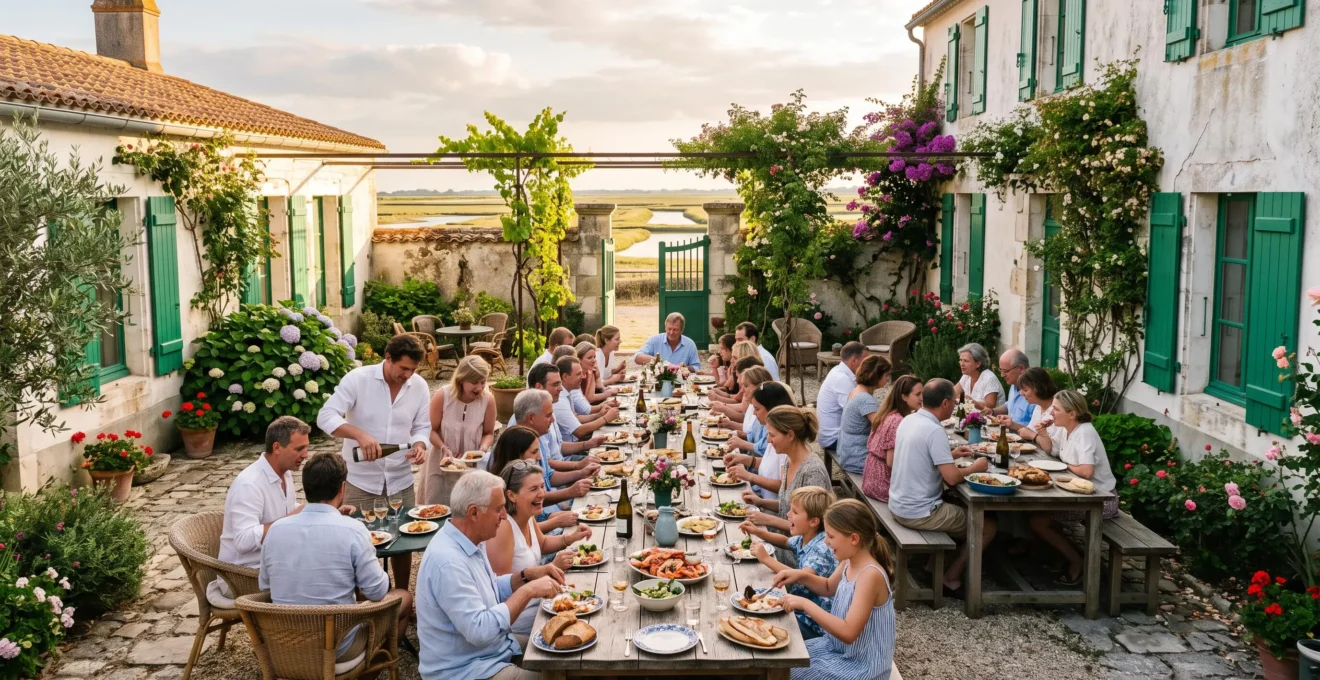
Planning luxury villa holidays on Île de Ré for families and friends comes down to one challenge: matching everyone’s expectations to a limited, highly sought-after supply—especially in summer. The safest approach is to decide in this order: capacity and layout (so the group actually lives well together), village and access (so daily logistics stay effortless), then services and equipment (so “luxury” is tangible rather than implied).
This article gives you a practical decision framework to compare villas calmly, anticipate peak-season pressure, and make trade-offs that feel fair to the whole group—without relying on vague promises or unsourced claims.
Your decision checklist for a luxury group villa on Île de Ré
- Start with capacity: bedrooms, bathrooms and shared spaces should fit your group’s rhythm (children, teens, grandparents, couples).
- Choose a village for your priorities: beach access, market life, cycling convenience, or quiet lanes—then shortlist within that perimeter.
- Define “luxury” in concrete terms: privacy, pool set-up, outdoor dining, high-spec kitchen, and optional services you will actually use.
- In peak season, treat availability as the constraint: align dates early, then confirm what is truly included in writing (equipment, heating, linen, housekeeping).
- Use one comparison grid for all listings to keep decisions objective and avoid “it looks nice” bias.
What Makes Île de Ré a Premium Destination for Groups?
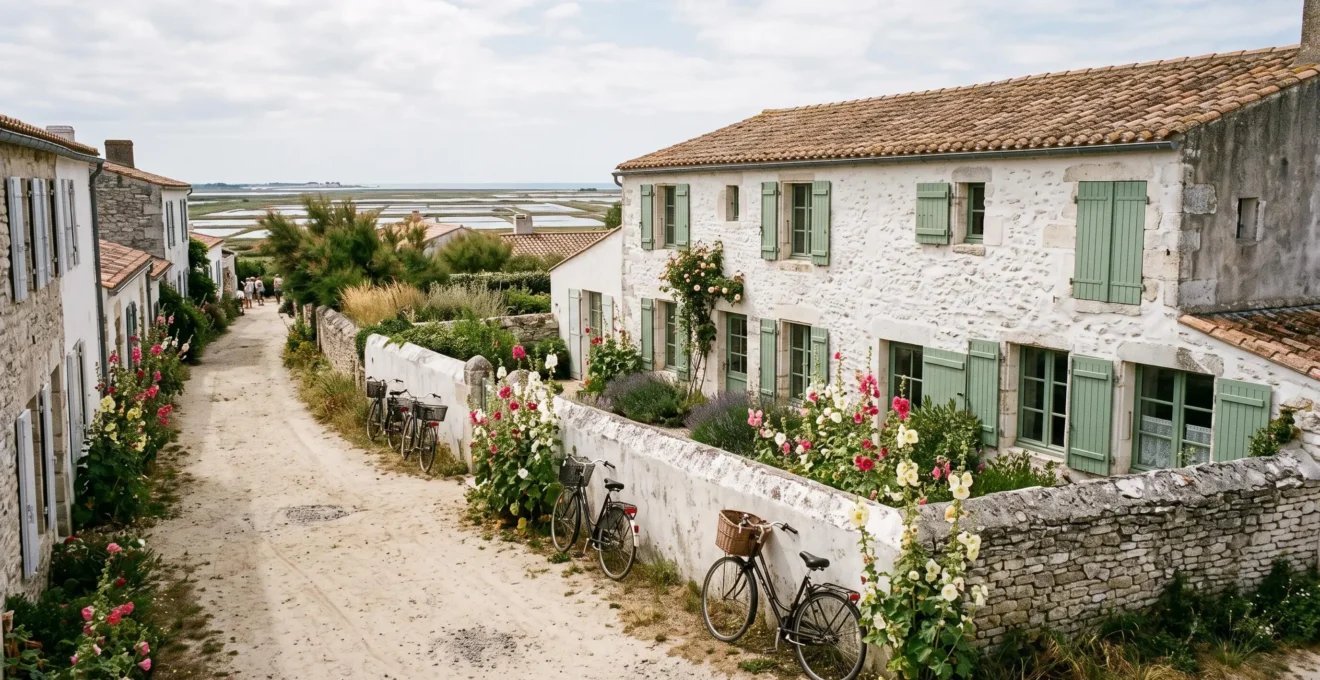
Direct answer: Île de Ré works particularly well for premium group holidays because it combines a protected island setting with villages and beaches that remain accessible without constant driving—making it easier for everyone (from children to grandparents) to share the same base and still have their own pace.
For a group, “premium” is rarely about a single wow feature. It is about how smoothly days flow: breakfast runs without queueing for the kitchen, beach trips do not require complex logistics, and you can alternate between lively village moments and quiet family time.
Demand can also be high in this part of the Atlantic coast. Insee notes that Charente-Maritime—home department of Île de Ré—recorded 3,925,472 overnight stays linked to tourist rentals in 2024, which reflects a strong seasonal pull for this type of accommodation (Charente-Maritime tourism rental statistics).
Which group set-ups benefit most from the island?
A villa stay on Île de Ré is especially relevant if your group needs both togetherness and breathing space. Two typical (hypothetical) set-ups illustrate it:
- Two families travelling together: you want one shared base for meals and beach gear, but enough separation so children’s schedules do not dictate everyone’s evenings.
- Friends across generations: some will cycle and explore; others will prefer markets, long lunches, or pool time—so proximity and low-effort logistics matter as much as the villa itself.
What should you decide before you even look at listings?
Make three decisions as a group before opening a single tab. It prevents “beautiful but wrong” shortlists and keeps the conversation objective.
- Your non-negotiable capacity rules: who shares with whom, and how many bathrooms you need to avoid morning bottlenecks.
- Your daily anchor: beach-first, village-first, or quiet-first. This is an location decision, not an aesthetic one.
- Your definition of luxury: privacy, pool comfort, top-end kitchen, services—only what your group will genuinely use.
Choosing a Luxury Villa on Île de Ré: Key Criteria
Direct answer: To choose a luxury villa that genuinely suits a group, compare listings through one grid: sleeping/bathroom reality, shared living space flow, village and access, and verifiable high-end features (not marketing wording).
The biggest mismatch in group holidays is rarely the décor—it is the layout. A villa can “sleep 12” on paper and still feel uncomfortable if the living room is tight, outdoor dining is undersized, or two bedrooms are effectively children’s annexes. Your first job is to translate capacity into how you will live together, hour by hour.
Capacity: what “sleeps X” means for real comfort
Start by separating headcount from privacy. For family and friends groups, comfort is driven by (1) how bedrooms are distributed, (2) bathroom access, and (3) how many people can gather without friction in the main living zones.
For a factual reference point, the official Île de Ré Tourist Office lists high-end villas such as “Villa Mer” in Sainte-Marie-de-Ré with a stated capacity of 12 to 14 guests, showing that larger, premium properties exist—while also reminding you that amenities and layouts vary by property (Île de Ré Tourist Office villa listing).
Practical rule for groups: ask for the bedroom plan (and bed sizes) and confirm how many full bathrooms are inside the main house versus annexes.
Shared spaces: the “make-or-break” luxury feature for groups
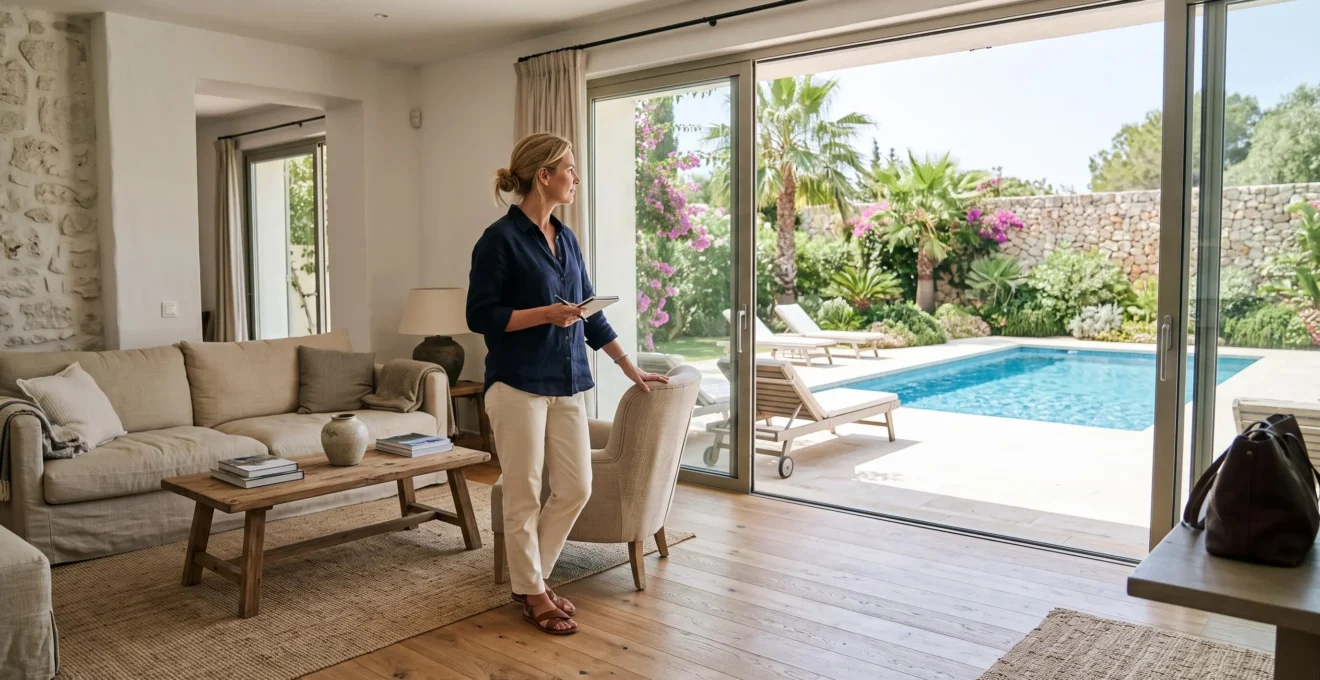
In a premium group villa, the most valuable “feature” is often simple: space that works at the same time. Look for a kitchen that supports multiple people, a dining set-up that fits your full group, and outdoor zones that let adults talk while children play safely.
If you are comparing two villas, ask yourself one concrete question: Where will everyone be at 18:30? If the answer creates a bottleneck (one small room, narrow terrace, limited seating), the villa may feel less luxurious in practice than in photos.
Location: how to choose between village life and beach proximity
To decide location without guesswork, anchor it to your group composition. If you have mixed ages or different energy levels, daily convenience often beats the “perfect view” because it reduces negotiation and transport stress.
Make the choice as a trade-off, not a ranking: a village-centre villa can simplify markets and evenings out; a beach-adjacent villa can make spontaneous swims easier. The “best” option is the one that removes friction for your particular group.
| Decision point | Village-centre feel | Beach-proximity feel |
|---|---|---|
| Best for | Groups who prioritise markets, cafés, evening strolls, and easy errands | Groups who want quick swims, surf time, or “villa → beach → villa” days |
| Daily rhythm | More spontaneous village life; easier split plans (some shop, some rest) | More beach-led; fewer “let’s go into town” moments unless planned |
| What to verify | Noise levels, parking practicality, and how close the villa truly is to shops | Walking route practicality, wind exposure, and outdoor shelter for meals |
| Common pitfall | Assuming “in the village” means quiet at night | Assuming “near the beach” means easy access without carrying gear far |
Services and “official” signals: what you can actually verify
When listings use words like “prestige” or “exceptional”, bring the discussion back to what is verifiable. In France, villas and holiday rentals can (optionally) obtain an official 1-to-5-star “meublé de tourisme” classification managed under the Atout France framework; it is a structured equipment-and-service assessment and is renewable every five years (official French villa classification criteria).
This does not tell you everything about a villa’s “luxury feel”, but it can help you compare concrete requirements. For example, Atout France’s référentiel states: “Pour les catégories 4 et 5 étoiles, sèche-linge privatif obligatoire”
(Atout France). Treat such points as supporting evidence, then still verify the exact equipment and services promised in the contract for your chosen property.
- If your group includes grandparents or very young children:
prioritise en-suite bedrooms on the ground floor (or minimal stairs), secure outdoor areas, and a calm village perimeter.
- If you are a friends group who will host long meals:
prioritise a generous kitchen/dining flow, weather-proof outdoor dining, and a pool area with seating for everyone.
- If you are planning peak-season dates:
prioritise the best layout first, then be flexible on village to secure the right capacity without compromise.
Why Do Families Return to Île de Ré Year After Year?
Direct answer: Families tend to return when the destination supports an easy, repeatable rhythm: safe autonomy for older children, calm mornings, active afternoons (often by bike), and evenings that work for mixed ages—without constantly reorganising transport and plans.
For group travel, loyalty usually comes from one thing: the holiday feels effortless once you are there. A well-chosen villa acts as your private “base camp”, so you can alternate between being together and splitting into smaller groups without paying for that flexibility in stress.
What a villa gives you that separate rentals often cannot
If you are hesitating between one large luxury villa and several smaller rentals, compare them through your group’s real pain points. A shared villa can reduce friction around meals, child supervision, and spontaneous plans—while separate rentals can increase independence but also multiply logistics (meeting points, duplicate groceries, repeated transport).
Is a luxury villa worth it? It is usually worth considering when your group values shared time as part of the “luxury” itself—long breakfasts, pool afternoons, and dinners that do not end when the restaurant closes. If privacy between households is your primary need, separate rentals may feel more balanced, even if the finish is less high-end.
Cas pratique
A hypothetical intergenerational group of 10 plans a week on Île de Ré: two grandparents, two parents, and six children/teens. Their decision grid prioritises (1) enough bathrooms to avoid queues, (2) a secure enclosed garden for younger children, (3) a kitchen/dining layout that fits everyone, and (4) cycling-friendly access so teens can move semi-independently. They deprioritise “sea view” because the group will spend more time cycling and at the market than sitting indoors.
How to avoid the most common “standing mismatch” in family groups
High-end finishes do not automatically mean high-end comfort for a group. The mismatch often appears when the villa looks luxurious but lacks the essentials for daily life at scale: enough seating, practical storage, shade outdoors, or a kitchen equipped for real cooking.
To prevent disappointment, ask one decisive question before booking: Which moments does our group care about most—meals, pool time, beach access, quiet sleeping? Then demand evidence (photos, inventory, written confirmation) for those moments, not for decorative details.
Planning Your Stay: Practical Tips for a Smooth Holiday
Direct answer: For a smooth group holiday, align your dates early, shortlist villas using one capacity-and-location grid, and confirm inclusions in writing—because peak-season choice is limited and last-minute changes are harder with large groups.
When a group is aiming for a luxury villa on Île de Ré, planning is not administrative—it is strategic. Your biggest constraints are usually date alignment and layout availability, not the number of listings you can browse.
- Fix the non-negotiables first
Agree on bedrooms/bathrooms, pool requirements, and the village “anchor” (beach-first, village-first, quiet-first).
- Create a shared comparison grid
Use the same criteria for every listing: sleeping plan, bathrooms, shared spaces, outdoor set-up, village access, and what is included.
- Plan for limited peak-season flexibility
Keep one or two acceptable date windows so you can act quickly if the right layout appears.
- Confirm what “luxury” means in that contract
Ask for written confirmation of key items you will rely on (pool conditions, linen/housekeeping frequency if applicable, parking practicality).
When should you book for summer on Île de Ré?
If you are travelling in peak season with a large group, treat early planning as a risk-reduction tool rather than a bargain strategy. The larger the villa and the more specific your requirements (en-suites, privacy, heated pool), the less room you have to “wait and see”.
Because this article relies only on verifiable sources, it does not state a fixed booking window in months. Instead, use a practical indicator: the moment your group can commit to dates is the moment you should start shortlisting seriously, because changing dates later is harder when multiple households are involved.
Which period is best depending on your group?
The “best” period depends on who you are travelling with and what you want to do daily. If your group includes school-age children, you may be constrained by holidays; if it is adults only, shoulder periods can offer a calmer rhythm and potentially more choice. What matters is matching the period to your group’s energy and tolerance for crowds, then choosing a villa layout that supports that rhythm.
What should you plan in advance for mixed-age groups?
Plan the parts that create friction when improvised: meal organisation (who cooks when), cycling logistics (who needs what), and a realistic split between “together” activities and optional time. Luxury, for a group, is often the freedom to opt in and out without guilt.

Beyond Île de Ré: Extending Your Luxury Holiday Experience
A successful villa stay creates a transferable method: define your group’s real needs, choose location for daily ease, and verify what is included rather than trusting adjectives. You can reuse the same grid for other premium destinations—whether you want a coastal rhythm, countryside privacy, or a multi-stop itinerary.
If you are considering a broader portfolio of high-end stays, this internal resource may help you frame what “exceptional” means beyond one island: exceptional villa getaway.
Which villa can comfortably host our whole group?
The most reliable way is to ignore the headline capacity and validate the “living reality”: bedroom distribution, bathroom count, and shared spaces sized for everyone at once. Ask for a floor plan (or detailed room list), confirm bed sizes, and check that outdoor dining and seating match your full group—because those are the moments that reveal true comfort.
Which villages are best placed near beaches and cycling paths?
Rather than chasing a single “best” village, pick the one that supports your group’s anchor: beach-first (fast access for swims), village-first (markets and evening life), or quiet-first (rest and privacy). Then shortlist villas within that perimeter and verify real-world access (walking routes, parking practicality, and how easy it is for different ages to move around).
How do we compare “luxury” between two villas without being misled by photos?
Compare only what you can verify: privacy (overlooked or enclosed outdoor space), pool set-up (safety, comfort, and any conditions), kitchen practicality for group meals, and written confirmation of inclusions you will rely on. If a villa has an official French “meublé de tourisme” star classification, use it as a supporting benchmark—but still confirm the exact equipment and services in the rental agreement.
How early should we book for summer on Île de Ré?
For peak-season group travel, start as soon as your households can commit to dates, because the right layout (not just a “nice” villa) is the limiting factor. Keep one or two acceptable date windows, shortlist quickly based on capacity and village, then confirm key inclusions in writing before you commit.
Andaman Sea welcome experience
For families and friends, the villa that feels truly luxurious is the one that makes your group’s daily life simple: enough space to share, enough privacy to breathe, and an island location that keeps plans flexible. If you use a single comparison grid—capacity, village, and verifiable services—you will make decisions faster, negotiate trade-offs more fairly, and book with far less uncertainty in high season.